Solo Leveling Manhwa vs Anime: Art, Pacing & Power Scaling Differences Explained
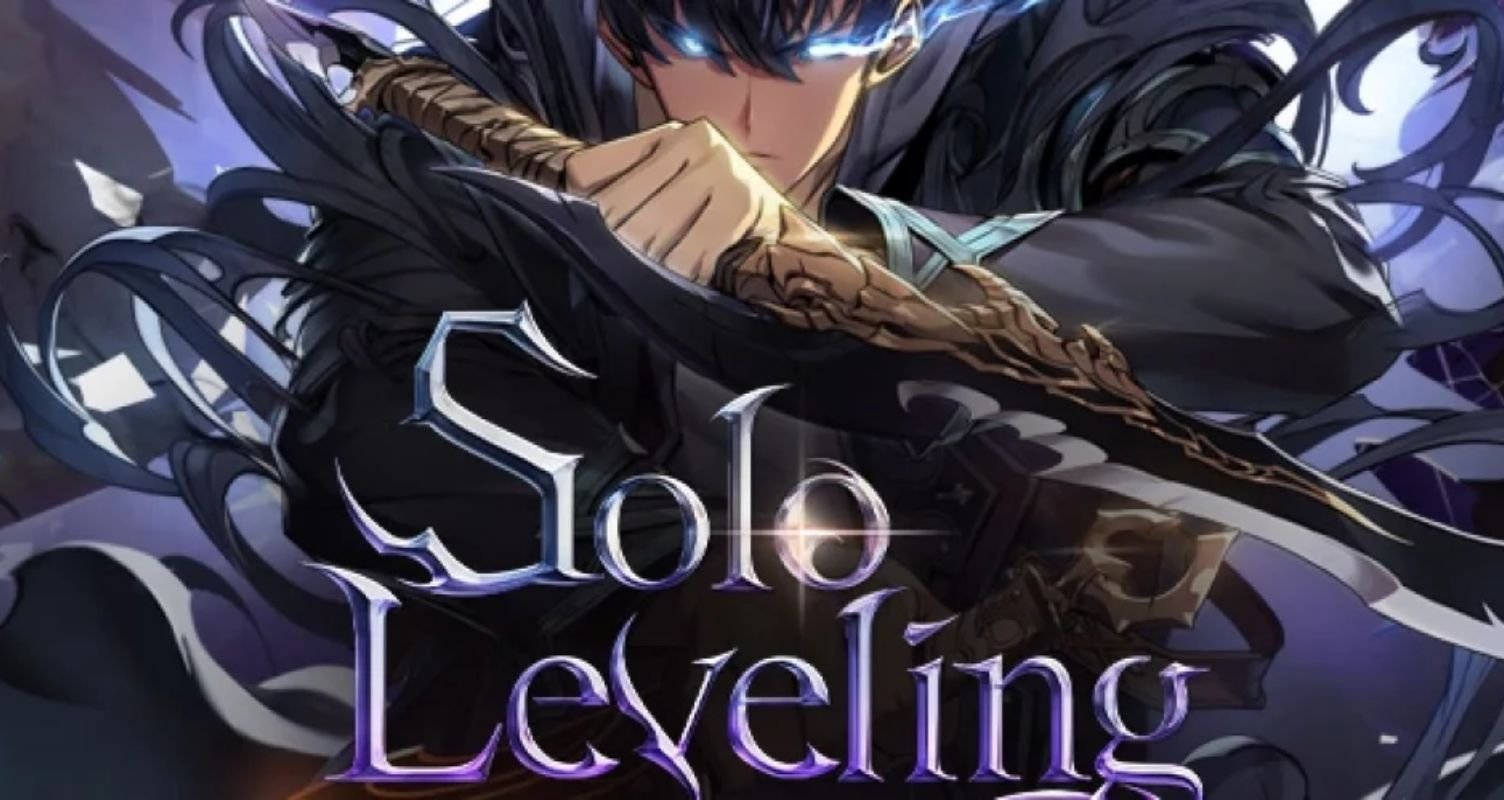
Few modern series have shaken up the anime and webtoon world quite like Solo Leveling. The South Korean manhwa, written by Chugong and illustrated by the late Jang Sung-rak (Dubu), became a global phenomenon for its dark fantasy setting, crisp art, and the epic rise of Sung Jinwoo from weakest hunter to godlike being. When the anime adaptation was announced by A-1 Pictures, fans were both thrilled and nervous — could the anime possibly match the manhwa’s stunning visuals and intense pacing?
In this post, we’ll break down the key differences between the Solo Leveling manhwa and anime in three crucial areas: art, pacing, and power scaling, and see which version captures the essence of Jinwoo’s journey best.
1. Art & Visual Presentation: Manhwa’s Digital Mastery vs Anime’s Animation Style
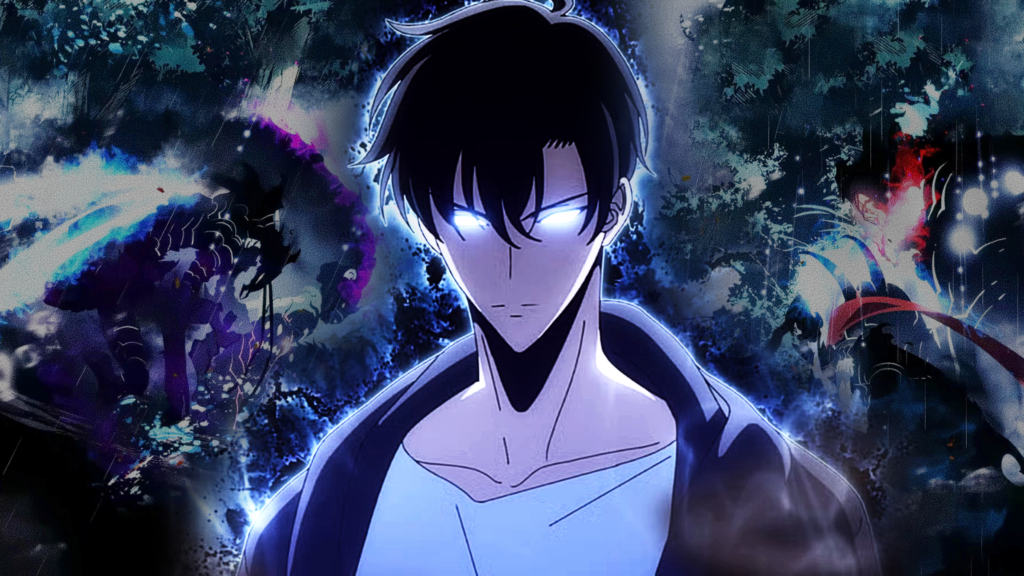
The most obvious difference between the Solo Leveling manhwa and anime lies in the visual design. The manhwa, being a full-color digital comic, set a new bar for webtoon artistry. Dubu’s artwork is meticulously detailed — from the sharp lines defining Jinwoo’s evolving physique to the glowing blue and black tones that represent his shadow powers. Every dungeon, monster, and blade strike feels heavy and cinematic, with panel layouts designed to emphasize scale and tension.
In contrast, the anime takes a more cinematic and fluid approach, as expected from A-1 Pictures, the studio behind hits like Sword Art Online and Kaguya-sama: Love is War. The anime uses smoother gradients, motion effects, and dynamic lighting to bring the same atmosphere to life. However, some fans note that while the anime’s animation fluidity is impressive, it lacks the hyper-stylized intensity of Dubu’s art.
For instance, Jinwoo’s transformation after the “Double Dungeon” arc in the manhwa is drawn with stark shadows and piercing blue eyes that exude menace — a scene that became iconic online. In the anime, the same moment is beautifully animated but slightly toned down to fit a more mainstream aesthetic. The anime adds dramatic camera pans and sound design, giving emotional weight but losing a touch of that raw manhwa intensity.
In short:
- Manhwa: Bold, crisp, painterly style — built for maximum visual impact.
- Anime: Smooth, atmospheric, cinematic — prioritizes motion and immersion.
Both shine in different ways, but purists argue that the manhwa’s art still feels more powerful frame-by-frame.
2. Story Pacing: The Manhwa’s Build-Up vs Anime’s Streamlined Narrative
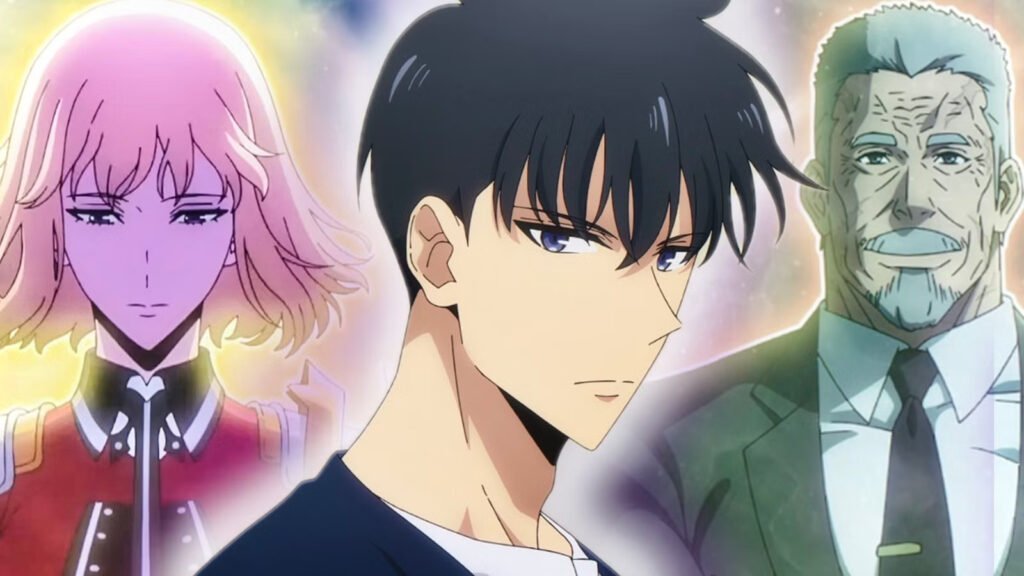
When adapting a webtoon into anime, pacing always becomes a balancing act. The Solo Leveling manhwa is structured like an RPG — each arc takes time to establish new ranks, dungeons, and side characters. It’s a slow burn, giving readers room to absorb Jinwoo’s growth.
The anime, on the other hand, condenses several of these build-ups to maintain momentum across 12 episodes. The early chapters, which took multiple manhwa episodes to explore Jinwoo’s struggles as an E-Rank hunter, are streamlined in the anime to get to the “System awakening” faster.
While this makes the anime more accessible for newcomers, it sometimes sacrifices emotional pacing. The manhwa allows you to feel Jinwoo’s isolation and despair before his power-up — the claustrophobic silence of the Double Dungeon feels endless. The anime recreates that tension but shortens the buildup, making the transformation more abrupt.
However, the anime compensates with soundtrack and motion — the music swells during the dungeon collapse, creating a cinematic rush that even longtime manhwa readers find thrilling.
So while the manhwa wins in character-driven pacing, the anime delivers better narrative efficiency for viewers with limited time.
3. Power Scaling & Fight Choreography: Strategy vs Spectacle
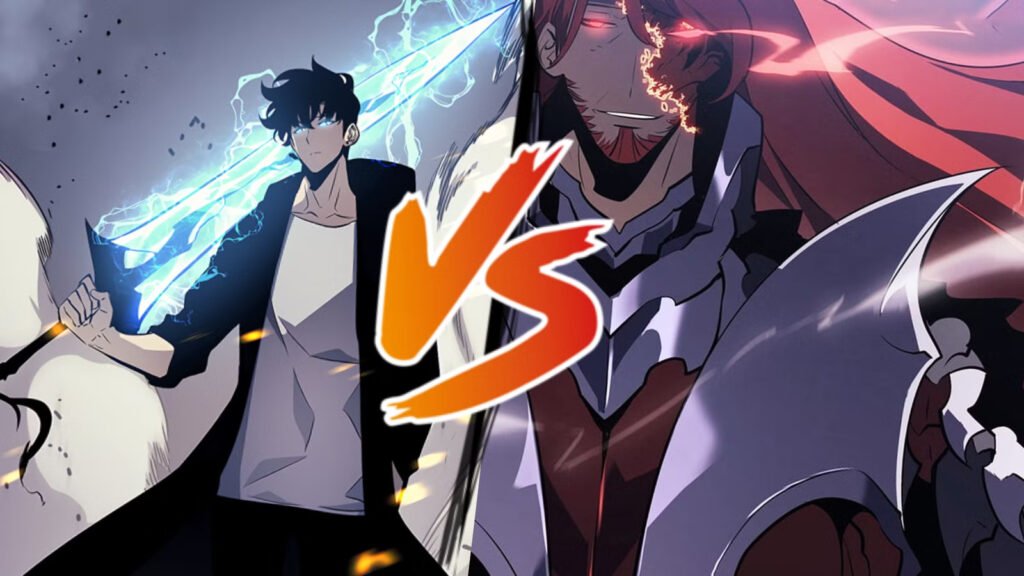
Power scaling — how Jinwoo’s strength evolves — is one of Solo Leveling’s greatest appeals. In the manhwa, his growth is visualized through progressive art cues: sharper contrast, larger shadows, and more complex creature designs. His battles feel strategic; readers see stat windows, skill upgrades, and careful planning, echoing the feel of a role-playing game.
The anime, however, reinterprets these moments with kinetic fight choreography. Instead of focusing on stat boxes and RPG-style pop-ups, it highlights the flow of movement — spinning blades, shadow summons, and magical explosions. This makes the power escalation visually exciting but sometimes less clear about how Jinwoo’s power actually scales.
For example, in the manhwa, the battle against the Blood-Red Commander Igris is a turning point — a precise, tactical duel that marks Jinwoo’s evolution into a real hunter. In the anime, the same fight becomes a high-speed spectacle with glowing runes and camera spins. It’s thrilling, yes, but it focuses more on impact than strategy.
When it comes to fan preference, opinions are split:
- Manhwa fans love the systematic RPG progression and the satisfaction of seeing stats rise logically.
- Anime fans prefer the visceral experience — the movement, voice acting, and music amplify every victory.
Both versions succeed in portraying Jinwoo’s godlike evolution, just in very different ways.
Final Verdict: Which Version Captures Solo Leveling Best?
Comparing the Solo Leveling manhwa vs anime isn’t about choosing a “better” version — it’s about appreciating how each medium enhances different aspects of the same story.
- The manhwa remains unbeatable for its art direction and slow-burn pacing that lets fans savor every power-up.
- The anime delivers cinematic motion, immersive sound, and adrenaline-packed battles that make Jinwoo’s rise feel larger-than-life.
- If you want deep world-building and breathtaking stills, the manhwa is your pick.
- If you crave explosive fights and emotional crescendos, the anime is unmissable.
Either way, both versions prove one thing: Solo Leveling isn’t just a story about power. It’s a story about transformation — one that continues to evolve across every medium.